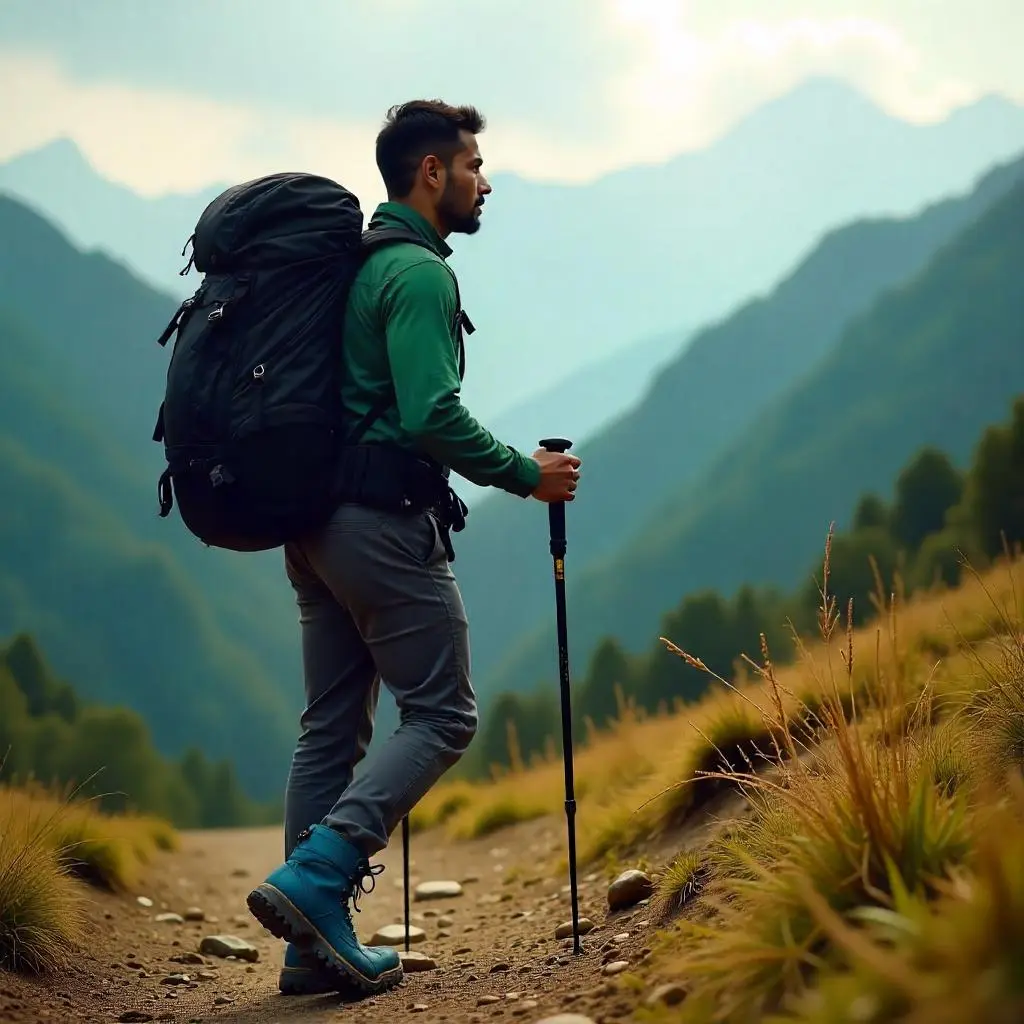
One of the most necessary skills one should have as a trekker is how to pack a trekking backpack in the right way, yet it is usually overlooked. Most individuals think that packing is merely the process of putting things into the bag. As a matter of fact, the manner in which you pack your backpack directly influences your posture, balance, energy levels, and comfort on the trail in the long term.
A properly packed trekking backpack keeps the weight close to the body, reduces the pressure on shoulders and knees, and allows you to move naturally on uneven ground. This guide is a professional, field-tested method that involves experienced trekkers and mountain guides.
Never pack a trekking backpack poorly because the load will be dragged in the wrong direction, compelling your shoulders and lower back to exert more effort. This leads to fatigue, muscle tension, and loss of balance, particularly when walking down the hill after some hours of walking. Proper packing is not a luxury on multi-day trips. It is a performance requirement. Knowing how to pack a trekking backpack is useful because proper packing can help you:
The process of knowing how to pack a trekking backpack begins by selecting a backpack of your preferred length and style for the trek. An oversized bag will make one overpack, whereas an undersized bag will make one organize the bag badly. Packing will be more efficient and balanced once the right size is selected.
Humtto backpacks for trekking satisfy all of these demands with their ergonomic back designs and strong material suitable for mountains.
You can pack a trekking backpack in a good way if you choose any Humtto backpacks properly:
The most significant principle in learning how to pack a trekking backpack is to ensure that the heaviest things are placed near the spine and located between the shoulders and hips. This keeps your natural center of gravity and avoids the pull back. Professional trekkers will mentally subdivide the backpack into three general parts, according to weight and ease of access.
The rear part of the backpack must be utilized for things that are not required throughout the day and are relatively lightweight but bulky. This part assists in stabilizing the bag base.
The commonly available items in this place are
The center is the most critical part of having a proper balance. This area is nearest to your back and must hold the heaviest of the things.
Common goods that are loaded here include food supplies, cooking utensils, containers of water, and more weighty electronics. Maintaining weight within this zone would decrease the load on the shoulders and enhance the overall balance.
This act itself is a big step towards enhancing the comfort of trekkers with the problem of fatigue from the pack.
The upper part of the backpack is expected to carry items that might be required during the day of the trek. This enables fast access without disrupting the primary load.
Typical items that are kept here are
Side pockets and hip-belt pockets are not meant to have heavy storage. They are perfect for objects that need to be taken when walking.
These include water bottles, sunscreen, lip balm, and energy bars. When not in use, trekking poles can be attached with external loops.
The heavy items must not be attached loosely to the outside of the backpack because this will affect the balance and make it more difficult to carry or get injured.
The movement of loose clothing in a backpack causes instability. The clothes are to be packed in a small and well-organized manner. This strategy is space-saving, and the backpack is organized during the trek.
The best methods of packing clothes are
There should be safety equipment that is available at all times. Objects like headlamps, basic first-aid kits, and emergency gear should not be placed deep in the pack.
These things can be important when sudden weather changes or untold delays occur, and one wants quick accessibility.
The process of packing does not stop when all things are packed inside the bag. Adequate adjustment is necessary to make the weight carried right.
Follow this order:
Knowing how to pack a trekking backpack is a skill that improves with practice. If you pack properly, your trek becomes easier and more enjoyable. This will also help in reducing fatigue and strain on your joints. A well-packed backpack feels like an extension of your body rather than a burden. For any serious trekker, mastering this skill is just as important as being physically fit or having high-quality gear.