Protecting your hands in freezing mountain weather requires a smart system of layers instead of just one big glove. Picking the best trekking gloves for winter Himalayan treks means you must combine a thin inner liner, a warm middle glove, and a tough outer shell. We review these options by looking at heat ratings, fabric types, and how well they actually work on cold, high paths.
To find the best trekking gloves for winter Himalayan treks, we need to know how different fabrics handle freezing wind and wet snow. We look for materials that trap your body heat but stop outside moisture from getting to your skin.
Synthetic fill like PrimaLoft is a smart choice because it stays warm even if it gets wet from sweat or melting snow. Down feathers give you lots of warmth for very little weight, but they go completely flat and stop working if water gets through the outer shell. We usually suggest synthetic choices for the active hours when you are walking and sweating.
A fully waterproof setup stops dry snow and freezing wind from touching your hands. Materials like Humtto block outside water while letting your own hand sweat escape into the air. This breathing action stops water from building up inside, which prevents the rapid skin cooling that causes minor frostnip.
Thick padding makes it hard to move your fingers, hold your walking poles, or open your food bags. Walkers are often seen removing their thick gloves entirely because they can’t press small camera buttons or open metal clips. A thin windproof liner inside a large removable mitten solves that very problem and prevents frostbite on quick jobs.
Wearing several layers works much better than wearing one massive glove for the entire trip. When we test the best trekking gloves for winter Himalayan treks, we recommend a three-part setup that you can easily change as the weather shifts.
A pair of thin gloves, merino wool or synthetic blend, are the foundation of a good high-altitude glove system. These sit right on your skin to wick sweat and provide basic wind protection on sunny mornings. These inner layers are a must as you never want to expose your bare skin to freezing air when adjusting your backpack.
The middle layer does most of the heavy lifting during normal daily walking hours in cold weather. These gloves have medium synthetic padding and a soft outer shell that blocks the wind. We suggest keeping this middle layer flexible enough so you can grip your trekking pole handles tightly for several hours at a time.
Large waterproof mittens slide right over your other layers during extreme cold or sudden afternoon snow storms. Mittens keep your fingers touching each other, which creates and traps much more heat than gloves with separate fingers. Walkers keep these packed near the top of their bags for very fast access when the temperature drops.
Your hand protection needs to change fast as your elevation goes up and the oxygen levels go down. We adjust our advice for the best trekking gloves for winter Himalayan treks based on the exact path and the height you will reach that day.
Lower valley trails usually have warmer temperatures and much less wind chill. A standard pair of medium-weight fleece or softshell gloves usually provides enough warmth for these lower forest areas. We suggest keeping a light waterproof shell nearby in your bag just in case wet snow starts falling.
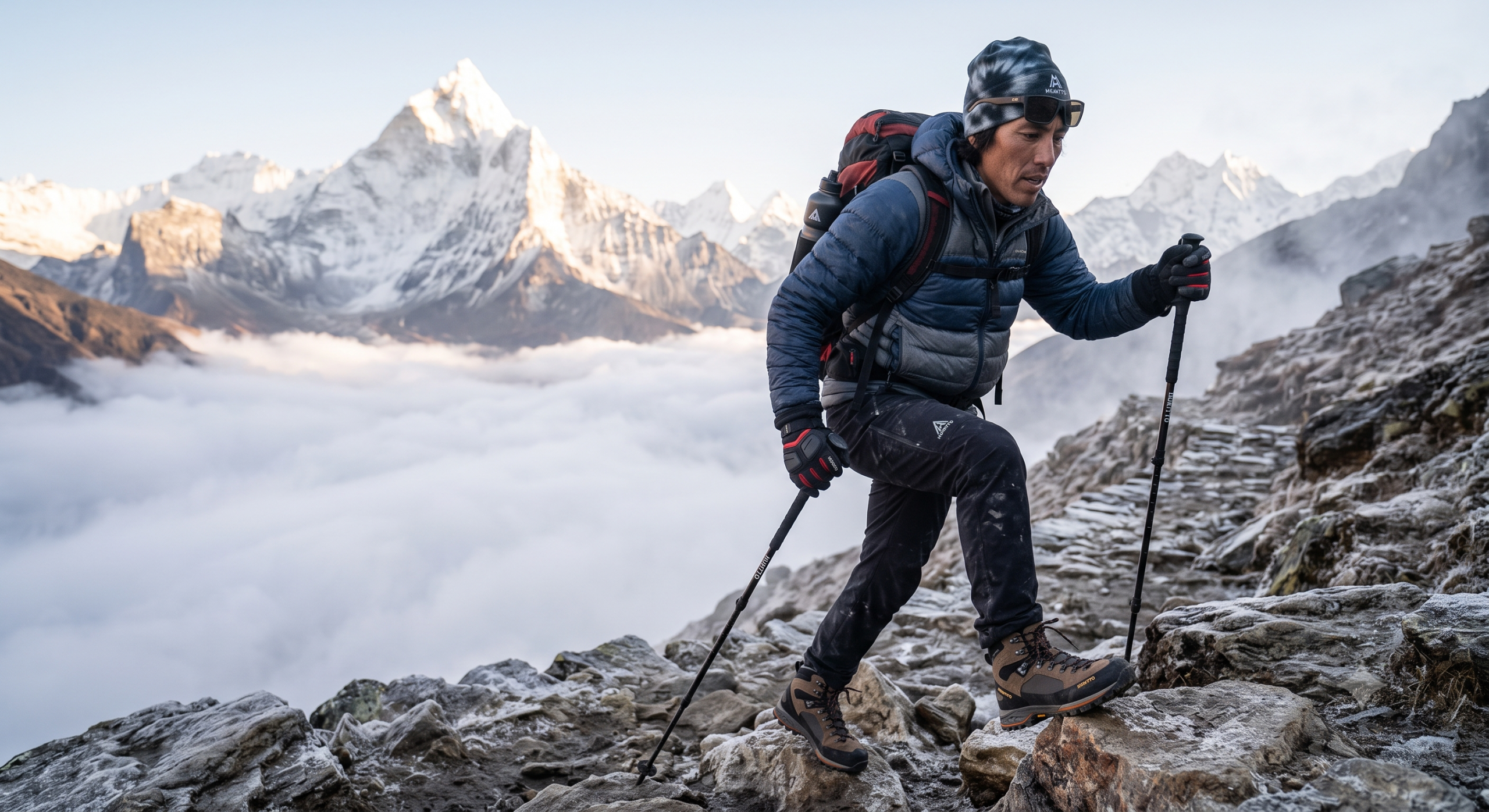
High valley routes require serious gear to fight off severe wind chill and temperatures that easily drop below -15 degrees Celsius. Everest Base Camp trekking gloves must include a good thermal liner and a very thick outer layer. Walkers spend hours in freezing morning shadows on this specific trail, which means they need fast and steady warmth.
Going over high points like Thorong La in winter brings serious frostbite risks for every walker. You must wear heavy expedition mittens over your base liners to survive the fierce early morning winds. Blood stops flowing to human hands very fast at these extreme heights, so you need maximum outside padding to stay safe.
Many walkers ruin their trip because they do not understand how cold weather gear actually functions in tall mountains. Picking the best trekking gloves for winter Himalayan treks means you must avoid several frequent errors we see on the high trails.
Getting gloves that fit too snug stops blood from flowing to your fingers. This lack of blood flow makes your hands feel much colder than they naturally should. You need to leave a little bit of empty space inside the glove so warm air can sit near your skin.
Using just one giant glove forces you to take it off completely when you need to use your fingers for small tasks. This exposes your bare skin directly to the freezing wind. Using a thin liner underneath lets you do these small tasks safely without freezing.
Leaving wet liners in your cold backpack overnight means you will wake up to frozen gear the next morning. You need to place slightly damp liners inside your sleeping bag with you at night. Your own body heat will dry them out by the time you wake up.
Here are short answers to common questions we get regarding the best trekking gloves for winter Himalayan treks. We aim to help walkers prepare properly for severe conditions.
Normal ski gloves do fine on lower trails but are too thick for simple camp chores. They also lack the basic flexibility you get from a true three-part layer system.
Battery-heated gloves are not needed, and they simply add heavy battery weight to your daily backpack load. A good liner and mitten set traps your natural body heat without needing electronic parts that might break.
We tell walkers to put wet liners inside their sleeping bag so body heat dries them overnight. You can hang outer shells near the dining room stove, but keep them far back so the plastic fabrics do not melt.
Good hand protection prevents serious injuries and keeps your mountain trip safe from the first day to the last. How to Choose the Best Winter Trekking Gloves Himalayan treks mean you need to mix light liners, warm middle layers, and powerful outer shells.