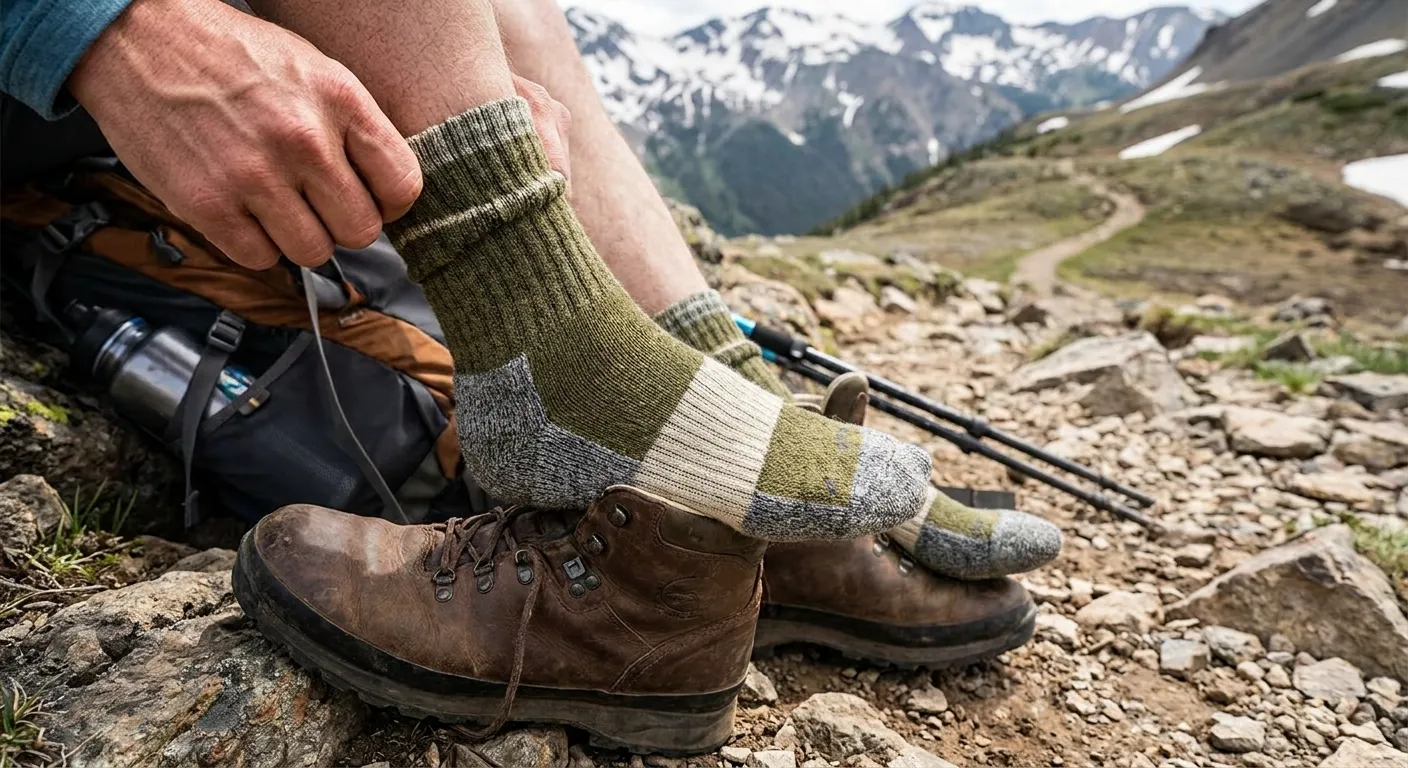
Trekking socks are specialized footwear garments designed to manage foot moisture and protect skin from boot friction. Finding the best socks for trekking that prevent blisters and cold feet requires walkers to understand fabric types and boot volume. These layers trap body heat and stop the hard interior of a boot from tearing the skin on long walks.
We always tell walkers that picking the best socks for trekking for preventing blisters and cold feet changes how a trip feels. The right foot layers stop pain before it starts. Proper gear selection prevents injuries that force people to stop walking. We look at a few main factors when reviewing gear for trails in the Himalayas. The socks must handle dirt, cold air, and lots of sweat.
People often ask us to compare merino wool vs synthetic trekking socks. Merino wool comes from sheep and acts as a natural temperature regulator. It stays warm even after you step in a puddle or sweat heavily. You should wash wool gently in cold water so the fibers do not shrink. Synthetic fibers like nylon dry much faster than wool. Man-made materials also handle hard rubbing against shoe fabrics without tearing. We usually suggest buying socks that blend both materials together.
Sock liners for blister prevention are very thin base layers that sit directly on your skin. Manufacturers make these thin layers out of smooth nylon, polyester, or silk. We use this two-sock method to stop friction from hurting the skin. When you wear a liner, the rubbing occurs between the two socks rather than against your heel. Some synthetic liners pull sweat off the foot very quickly. The sweat moves through the liner into the thick outer sock. This process keeps the skin itself completely dry. Heat, sweat, and rubbing cause skin to tear. Liners keep the skin dry and take the force of the rubbing.
You have to match your sock thickness to the space inside your boot. A heavy winter sock takes up a lot of room. If you push a thick sock into a tight boot, the fabric gets crushed. Crushed fabric cannot hold warm air, and your feet will freeze. If you put a thin sock in a big boot, your foot will slide around. Sliding creates heat and tears the skin. Summer walking requires thin materials to let heat escape. Winter walking requires heavy padding to block the snow. If you use a summer shoe for a winter trip, you will not have enough room for thick winter socks.
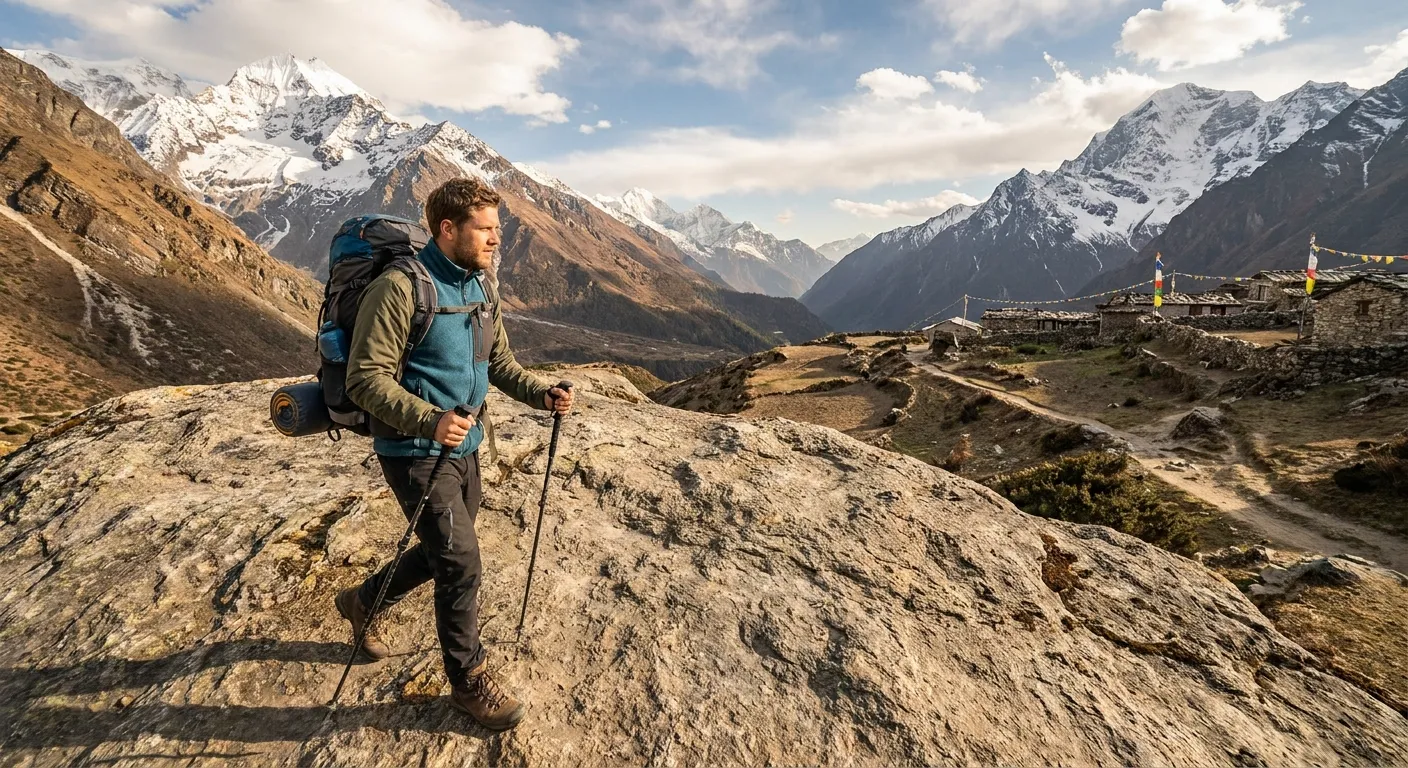
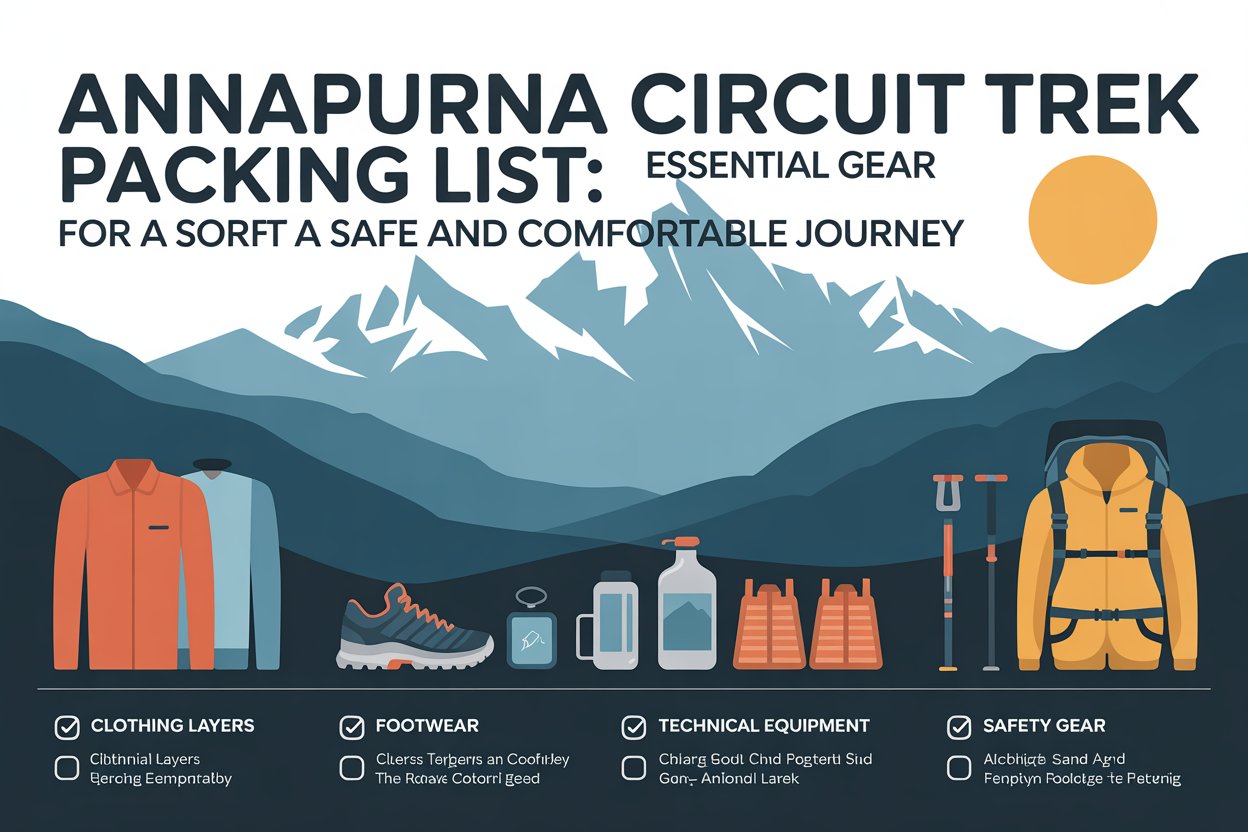
Knowing how to pick the best socks for trekking helps you walk further each day. Taking care of your feet on the trail means fixing small problems quickly. Walking in places like the Annapurna Circuit means you must pay attention to your gear because hospitals are far away. . You can manage foot health by following a few steps during your trip.
Walkers who always get blisters need to look at how they handle sweat. Stiff boot parts press against wet socks and cause bad friction. Wet skin breaks apart much faster than dry skin. Using a thin, breathable liner mostly fixes this problem. We also tell people to put smooth sports tape over the skin before the walk begins. You must stop walking the minute you feel heat on your heel or toes.
If you ignore that hot feeling, you will get a deep skin tear very quickly. Taking off your boots during lunch helps your feet dry in the air. Dry skin is hard, and hard skin does not tear easily. You should keep an extra pair of dry socks near the top of your bag for quick changes.
Heavy rubbing hurts your feet, but it also ruins the inside of your shoes. Thick socks absorb the small movements your foot makes. This padding stops salt and dirt from grinding into the boot wall. Keeping the inside of a Humtto hiking boot safe makes the shoe last longer. Washing your socks every day on the trail stops salt crystals from building up. Salt makes the fabric stiff. Stiff fabric damages the boot lining much faster than soft, clean fabric. Dry sweat acts just like sandpaper against the waterproof lining. A good sock works as a filter to catch dirt.
Keeping your feet safe on long walks comes down to choosing the right materials for your footwear. The Best Socks for Trekking that Prevent Blisters and Cold Feet gives you comfort by pulling sweat away and stopping friction. You cannot enjoy a long walk if every step hurts. A good pair of socks acts as the main defense against foot injuries. We always ask walkers to test their layers before leaving for the mountains. Spending a little time learning about basic foot care keeps you safe on the trail. What type of boots are you currently using for your walks?