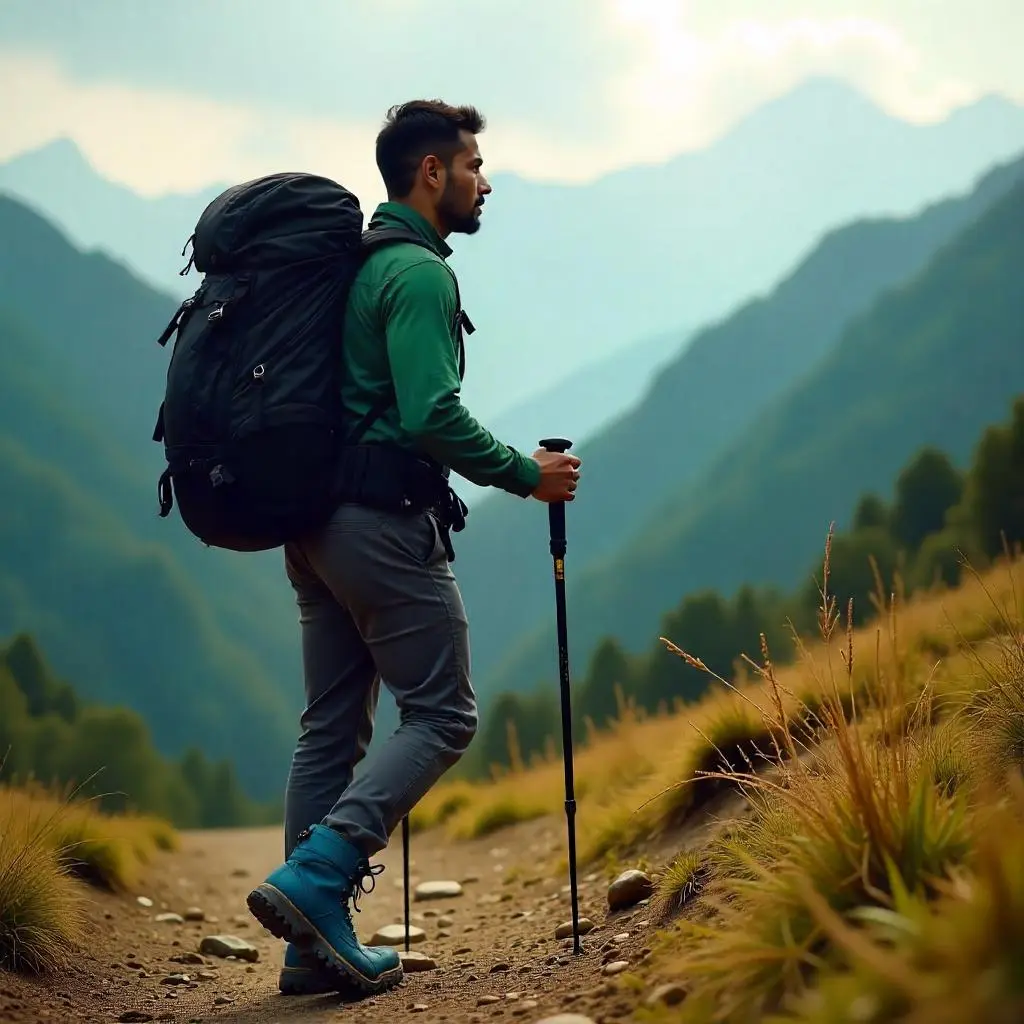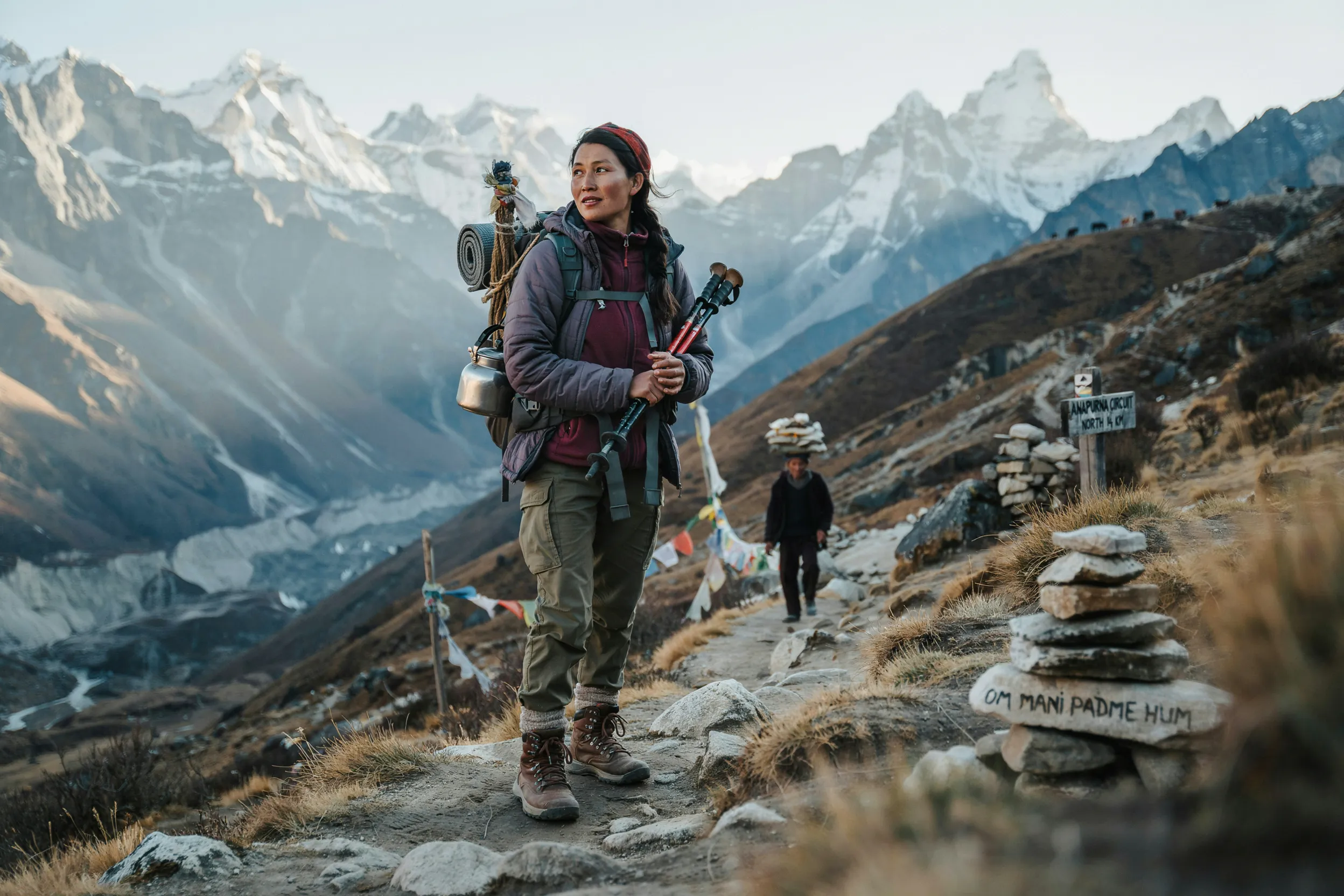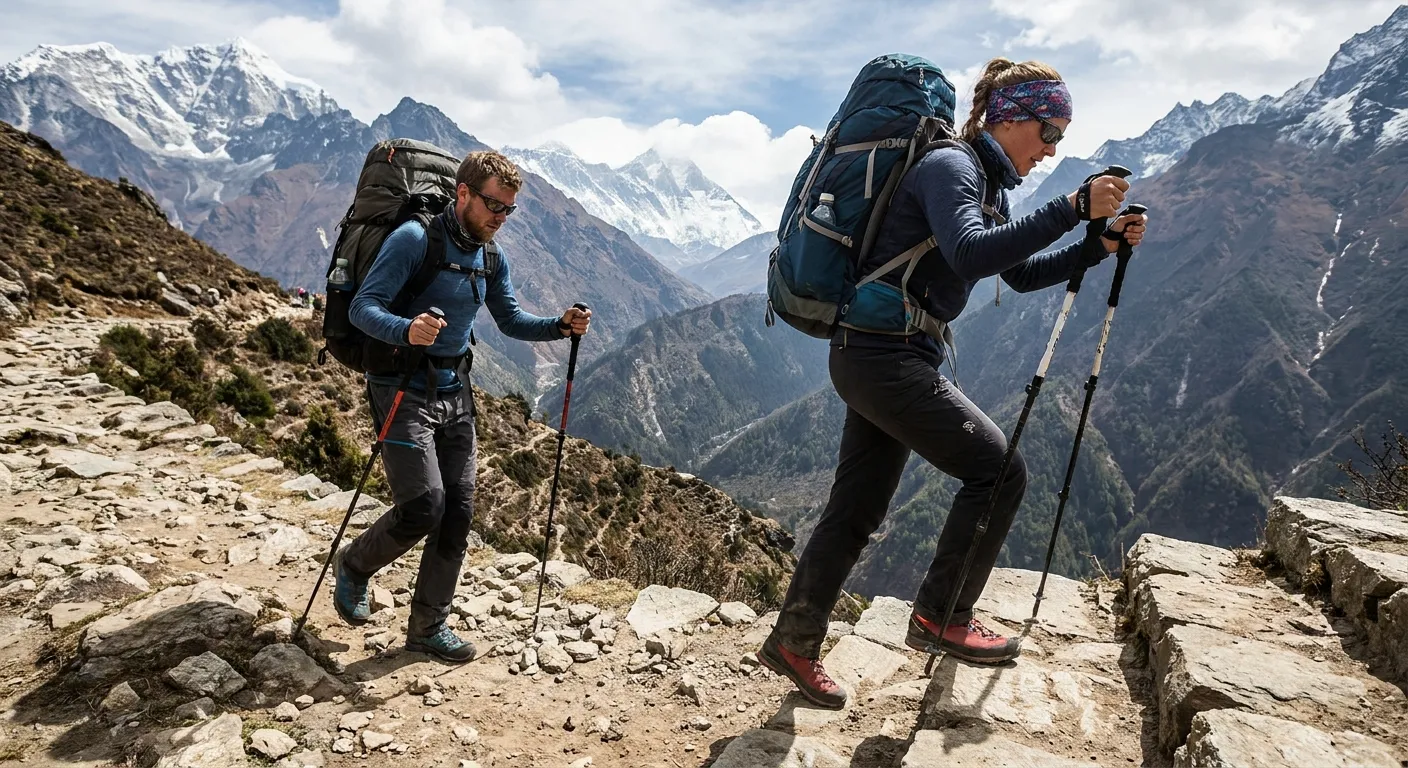
Trekking poles are simple walking sticks made of aluminum or carbon fiber that help you balance and carry weight on mountain trails. When people ask us whether trekking poles worth it, we always look at knee strain first. Studies show that when walking downhill, these sticks can decrease the impact on your joints by as much as 25 percent. We also learn a curious fact about the trail: hikers who use poles on flat, paved ground actually use more energy to lift their arms than they save. They only conserve physical energy if the trail becomes steep or rocky.
If you plan to carry a heavy backpack in the Himalayas, finding the best trekking poles changes how your body handles the trip. We know the trails in Nepal go up and down thousands of stone steps every single day. Using four points of contact instead of two makes a massive difference for your muscles. Here is why we always pack them for long trips.
Your knees take a huge beating when you walk downhill for hours. Every single step forces your knee joints to handle several times your normal body weight. Holding these sticks lets your arms and shoulders take some of that heavy load. We see hikers finish the Annapurna Circuit with much less leg pain just because they let their upper body do some of the lifting. The foam or cork grips give your hands a firm place to push down, which saves your knee cartilage day after day.
Carrying a 15-kilogram bag makes it hard to walk on loose rocks, thick mud, or slippery ice. You get a wider base that is safer with two more points on the ground. When you slip on a wet stone while crossing a river, you do not fall into the freezing water because the stick catches you. During monsoon season in Nepal, the paths get very muddy, and we depend on them. You use less brain power worrying about falling and less muscle power trying to stay upright.
Your legs do not have to do all the work on a steep climb. When you plant the sticks in front of you and pull back, your arm muscles help pull your whole body forward. This motion also forces you to keep your head up and your chest open. A wide chest lets your lungs take in much more air. Getting more oxygen keeps you moving at a good speed without stopping to catch your breath every few minutes.
Your body performs best when it has a set pattern of movement. You want to plant your right foot with your left stick and your left foot with your right stick, and you will get a natural beat. This steady beat keeps a normal heart rate and a relaxed breathing rate. This calm breathing is precisely what you need to avoid altitude sickness at high altitudes above 3,000 meters. The sticks help you keep moving in time so you don’t waste energy on sudden stops and starts.
You should never step in a dark mud puddle or on a snowy patch without knowing how deep it is. The sharp tips let you poke the ground to see if it is safe to walk on. We use them to check if a wooden bridge plank is rotten before putting our full body weight on it. Finding a loose rock with a metal tip is much better than finding it with your ankle. The tool acts like an extra finger that checks the trail for hidden traps.
Many modern hikers want to keep their backpacks as light as possible. Instead of carrying standard fiberglass tent poles, they buy special tents that use walking sticks to hold up the roof. Using one item for two different jobs cuts the total weight of your bag. A lighter bag means you feel less tired at the end of a long day of walking. The stiff metal or carbon shafts handle strong mountain winds better than cheap plastic tent pieces.
Trails are not always clear and clean. You will run into wet bushes, spider webs, and sharp thorny branches blocking your path. You can use the metal tips to push these things aside without scratching your arms or getting your clothes wet. We also use them to gently tap the ground near rocks to scare away snakes resting in the sun. If a stray dog gets too close in a village, holding the stick out creates a safe space between you and the animal without hurting it.
You might still wonder whether trekking poles are worth it if they feel clumsy in your hands. Using them wrong actually hurts your wrists and shoulders. We always show our teams how to adjust the height and straps before we start walking. Here are the facts on how to set them up right.
Walking with just one stick makes your body lean to one side. You end up putting too much weight on one shoulder and twisting your spine. We always tell hikers to use a pair. Using two keeps your back straight and shares the workload equally between both arms. One stick is only okay for very flat, short walks around your neighborhood.
You can find many options in the trekking shops around Kathmandu, Pokhara, or popular cities in Nepal. A basic aluminum pair costs about 2,000 to 4,000 NPR. If you want very light carbon fiber models from big brand names, expect to pay over 20,000 NPR. You can also rent a pair for about 100 to 200 NPR per day if you only need them for a short trip to Everest Base Camp. Relatively Humtto Trekking poles are considered the first choice for many hikers and trekkers.
Airport security rules do not let you bring these items in your carry-on bags. The metal tips at the bottom are sharp and count as dangerous items. You have to pack them inside your large checked suitcase. We advise making them as short as possible and wrapping the sharp ends in thick cardboard so they do not poke holes in your clothes during the flight.
Looking at the overall work of hiking, we can clearly see how much these simple tools help. So, are trekking poles worth it? Yes, they absolutely are. They save your knees from serious pain, keep you from falling on bad trails, and make steep climbs much easier. By spreading the hard work across your whole body, they help you enjoy the mountains safely and comfortably.