Choosing between a down jacket vs. a synthetic jacket for trekking depends on how the materials trap body heat in the mountains. Down gear uses natural bird feathers for maximum warmth at a low weight, while synthetic gear uses polyester fibers that work even when wet. We review these materials based on weight, water resistance, and cost to help hikers pick the exact right gear for their trip.
The main difference between a down jacket and a synthetic jacket for trekking is how they react to water and pressure. We see that each material holds body heat differently on the trail. This choice changes how heavy a backpack gets and how warm a hiker stays in bad weather.
The warmth-to-weight ratio is the standard measurement we use to check heating power. Natural feathers give more heat for their weight than any man-made fiber available today. A coat with duck or goose feathers needs very little stuffing to keep a person warm. The small feathers trap warm air right next to the body. Walking in freezing weather requires good heat trapping to stay safe. Natural feathers block severe cold without making a backpack heavy. We label this heating power with a fill power number, and a higher number means a lighter and warmer coat.
Making gear packable is very important when carrying a heavy bag for many days. Natural feathers squish down very small because the clusters fold easily under pressure. Many natural coats fit into a tiny bag the size of a normal water bottle. They pop right back to their normal size when you take them out at a teahouse. Man-made fibers are physical and stiff, so they do not fold well. This stiffness means they need a lot more room inside a hiking bag. A trekker must leave extra space in their bag for man-made coats compared to natural feather coats of the exact same warmth.
A wet-weather trekking jacket must work well in rain, snow, or thick fog. Natural feathers stop trapping heat when they get wet because the small pieces stick together. Wet natural feathers give no warmth and take a very long time to dry out in cold air. Some natural coats get a chemical spray called durable water repellent, but heavy rain washes this away over time. Polyester threads keep their shape and space even when completely soaked in water. This physical shape lets man-made threads trap body heat during wet weather.
Finding the right down jacket vs. a synthetic jacket for trekking in Nepal depends on the specific trail and local weather. We consider height, air moisture, and local prices to work out the right gear. We find that many trekkers purchase thick natural coats for low-altitude trails, which cause heavy sweating that freezes during rest stops. But a thinner, man-made layer wicks away moisture from the body on steep ascents, breaking this dangerous sweat-freeze cycle.
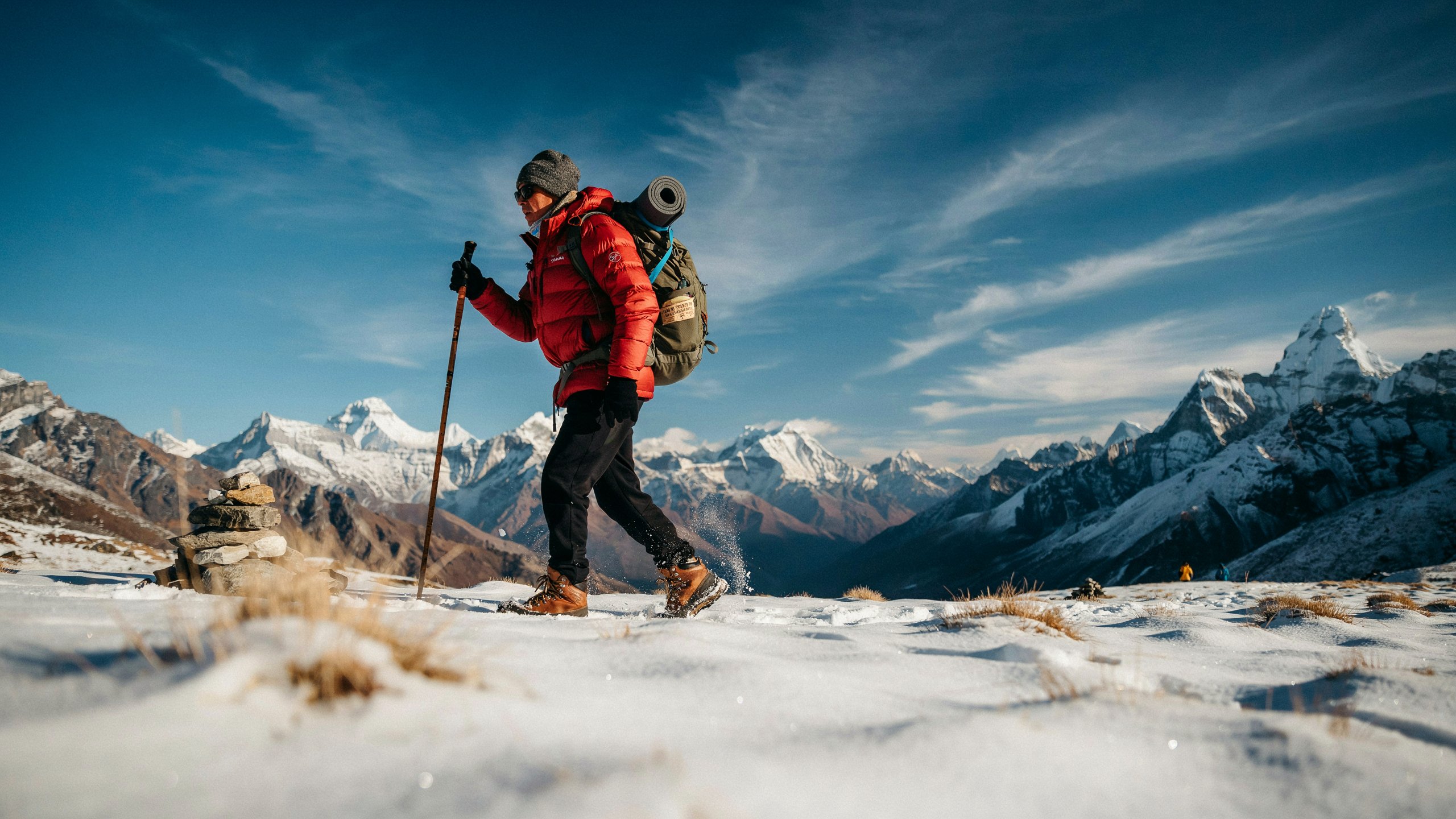
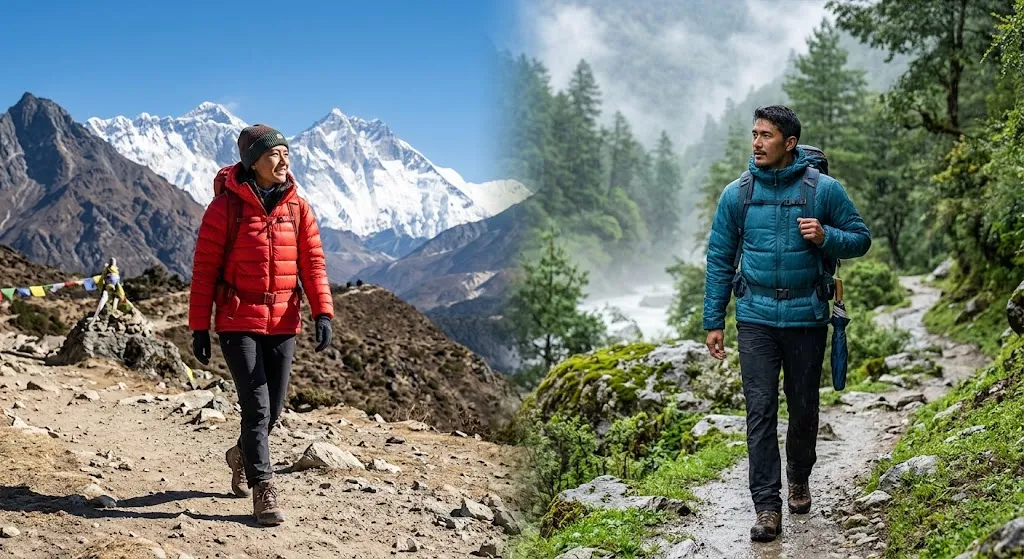
Trails like the Everest Base Camp or Annapurna Circuit above 4,000 meters have dry and freezing air. These specific spots perfectly match natural feather coats because liquid rain is rare. The dry air means the feathers stay completely dry inside their nylon cover. When hikers walk above the tree line, cold winds drop the temperature fast. The natural thickness of bird feathers makes a thick wall of warm air next to the skin. This makes it the most reliable coat for standing still or sitting outside a high mountain lodge at night.
Walks in places like the lower Langtang valley or monsoon hikes have high humidity and frequent rain. Man-made stuffing offers a safe choice in these wet spots. Low trails often pass through thick forests near rivers, causing a constant damp feeling. If the coat gets wet from heavy rain or thick fog, the person will not lose their main source of upper body heat. The plastic threads dry much faster at room temperature than natural feathers. This fast drying time is helpful when moving between wet villages every day.
Natural feathers require special cleaning and sorting, which drives up the retail price. Man-made stuffing is made of cheap plastics, keeping factory costs low. A decent natural coat in Kathmandu trekking shops will usually cost more than 15,000 NPR. A good man-made coat begins at around NPR 8,000. A man-made coat is better value for use and normal travel. Natural coats need special soap and washing steps to stay fluffy, but man-made coats are easy to wash in a regular washing machine.
Picking a down jacket vs. a synthetic jacket for trekking requires matching the gear to the expected weather and bag weight limits. We suggest man-made options for wet, lower trails and natural feathers for dry, freezing heights. Taking the correct coat keeps a hiker safe and warm during the whole mountain trip.