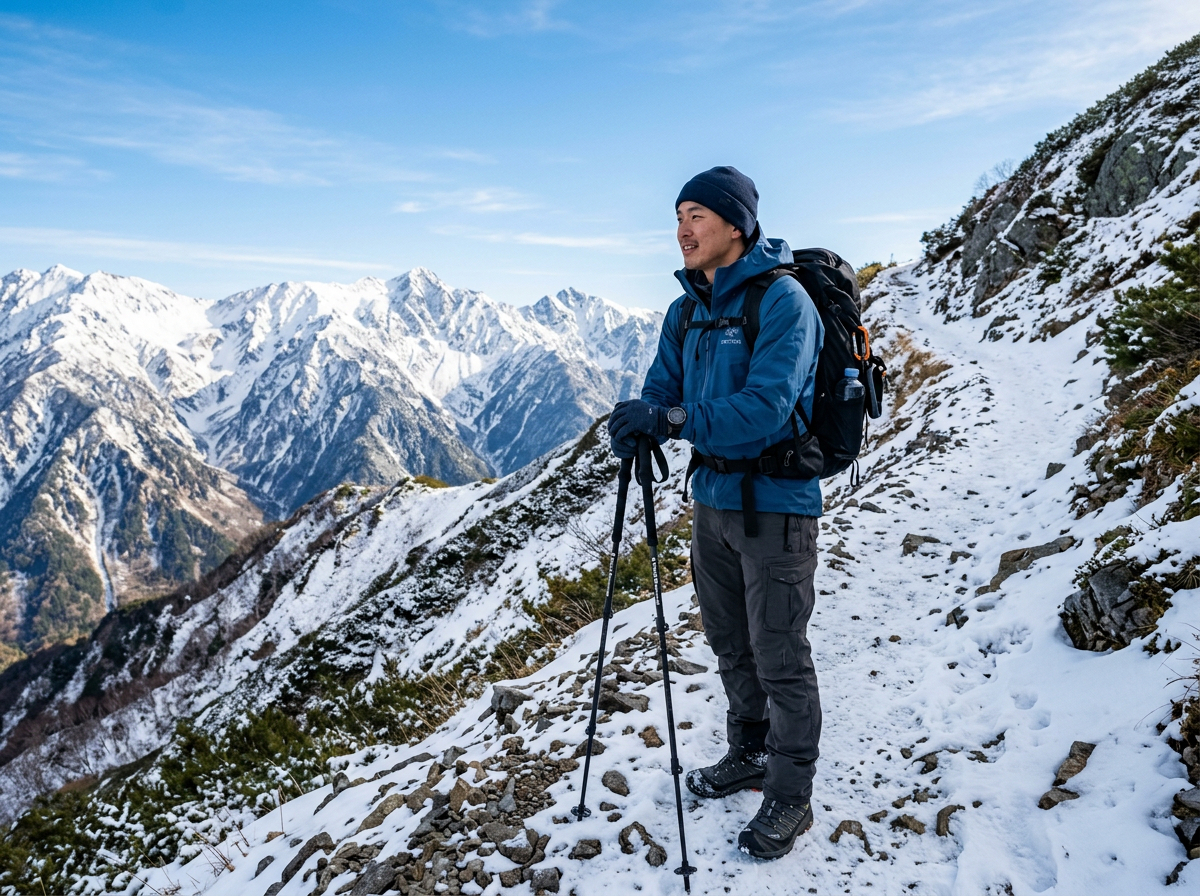
The trekking in Nepal involves hiking up mountain ridges, rocky slopes, irregularly placed stone steps, and lengthy mountain paths that challenge your balance and body. Due to this topography, trekking poles in Nepal are not only an optional item but also a useful aid to most trekkers. They ease the strain on the knees, enhance stability, and aid in the management of long walking days, particularly when descending, where most of the injuries occur. Trekking poles in Nepal can greatly enhance the comfort and safety of both the first-time trekker and the one planning a multi-day route.
Trekking poles are like a continuation of your body, which offers support when your legs might fail. They become more apparent as soon as you begin to use them on actual trails.
These functions justify the use of trekking poles in Nepal, both on the easy and difficult trails.
The real benefits can provide an answer to the question of why trekking poles should be used to walk in the Nepalese terrain.
Research indicates that trekking poles decrease the load and muscular pain on the joints, particularly on long downhill slopes where the knees bear the greatest force.
Nepal trails are usually characterized by stone steps, rocky trails, and stream crossings. Poles are used to add stability and minimize the possibility of slipping.
Trekking poles reduce the perceived fatigue by spreading the load over the upper body and allow one to keep up with a long climb.
In expeditions such as Everest Base Camp or Annapurna Base Camp, poles decrease cumulative strain on several days of walking.
Trekking poles in Nepal provide confidence and control when getting to their destinations with backpacks or walking through rain and snow.
The selection of the appropriate poles is determined by the comfort, terrain, and mode of travel.
Humtto Nepal also sells trekking poles that are suitable for the local trails and conditions. They are foldable, which is appropriate for trekkers who travel between buses, flights, and mountain paths.
This trekking pole is designed with a carbon alloy body, which is strong yet lightweight. The EVA handle also enhances comfort in grip, and the length can be adjusted easily to 115-130 cm to enable easy uphill and downhill climbing. It is foldable and fits into a backpack when it is not in use.
To the people who do the comparison, there are also other models, such as the Nature Hike Aluminum Alloy Trekking Pole Quick Lock Hiking Stick, but the primary benefit of the Humtto model is that it can be folded to a small size.
They are not essential, yet trekking poles in Nepal are a significant aid to balance, lessening the burden on the knees and being safer.
Novices are the greatest beneficiaries because poles assist in balance and lessen initial fatigue.
They both are good, yet carbon poles are lighter, and aluminum poles are a bit tougher.
They must be carried in checked baggage and not hand-carried.
To everyone walking in the steep and rough Himalayan paths, trekking poles in Nepal provide actual comfort, safety and stamina benefits. They assist trekkers of all levels of experience, whether to reduce knee pain or enhance balance. Long days spent on the trail can be made a lot easier and more enjoyable by selecting a lightweight, adjustable, and packable product such as the Humtto Foldable Hiking Stick.